
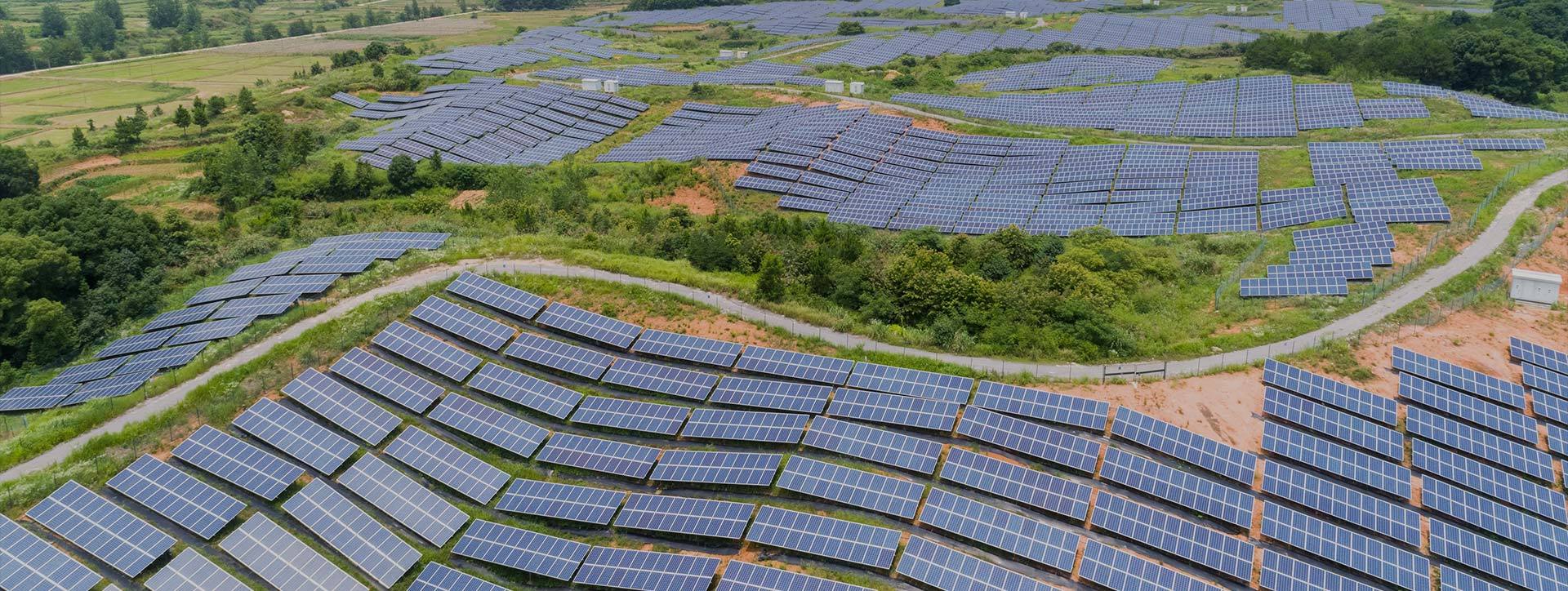
Mountain Photovoltaics

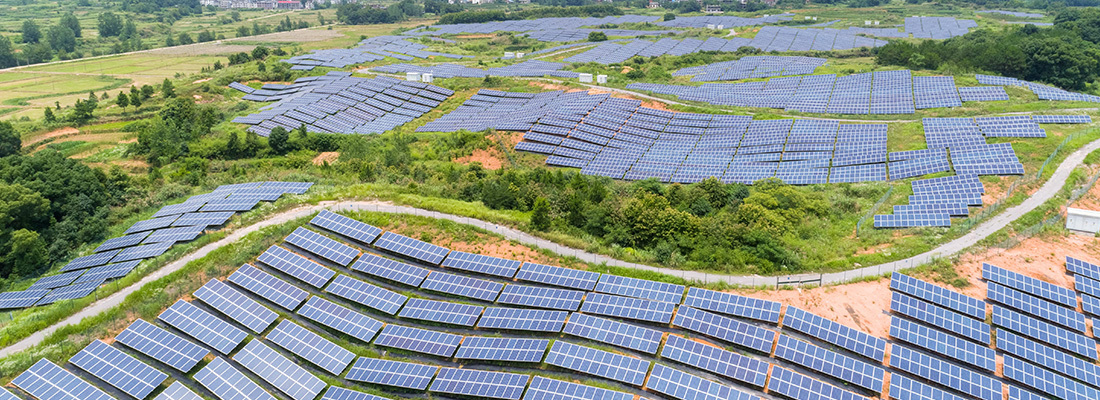
Efficient Land Utilization: Utilizing barren hills and slopes, the system avoids occupying arable land or urban areas. Flexible support technology is adaptable to complex terrain, and its high-clearance, wide-span layout improves land utilization, saving 30%-50% compared to traditional support systems.
High Power Generation Efficiency: Mountainous areas offer high altitudes, minimal obstruction, and excellent sunlight conditions. Module installation angles and orientations can be optimized based on the terrain to maximize sunlight absorption. Furthermore, the fresh air and lower temperatures in mountainous areas contribute to a longer lifespan and improved efficiency of photovoltaic panels.
Environmentally Friendly: Covering photovoltaic panels reduces surface evaporation, increases soil moisture and organic matter content, and promotes vegetation growth. Photovoltaic power generation is zero-emission, reducing greenhouse gas emissions and improving environmental quality.
High Economic Benefits: Large-scale photovoltaic panel deployment is possible, increasing total power generation. Using flexible support technologies reduces pile foundation construction and steel usage, lowering initial investment and construction costs, and improving economic benefits.
Good wind resistance: The flexible supports of some mountain photovoltaic projects adopt a spatial cable net structure design, which can enhance the torsional stiffness of the load-bearing cables, improve wind resistance, and can operate stably in extreme weather.




Telephone


Company Address

No. 333, Xijiang Road, Kunshan Economic and Technical Development Zone, Jiangsu Province.