
The Ministry of Industry and Information Technology held a symposium to promote the high-quality development of the photovoltaic industry
2025-07-03 14:23
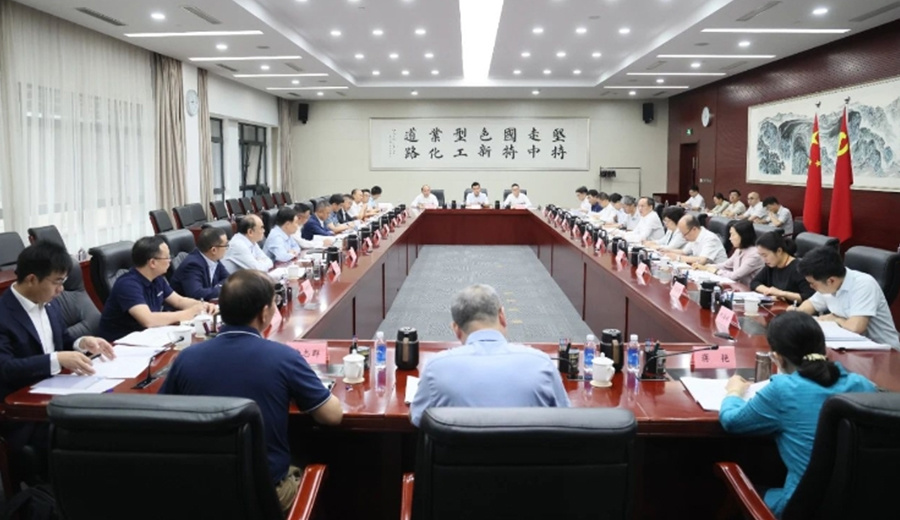
The Ministry of Industry and Information Technology held a symposium on the photovoltaic industry. On July 3, 2025, the Ministry of Industry and Information Technology (MIIT) held its 15th symposium for manufacturing enterprises, where leaders from 14 photovoltaic companies and photovoltaic industry associations exchanged views. Participating companies included leading enterprises such as Longi Green Energy, JinkoSolar, TCL Zhonghuan, and Trina Solar. Li Lecheng, Secretary of the Party Leadership Group and Minister of the MIIT, emphasized the need to comprehensively address low-price, disorderly competition in the photovoltaic industry in accordance with laws and regulations, guide companies to improve product quality, and promote the orderly exit of obsolete production capacity. Industry companies should focus on technological innovation, and industry associations should serve as a bridge and guide companies to strengthen self-discipline. The MIIT will strengthen macro-guidance and industry governance to safeguard the high-quality development of the photovoltaic industry.
The industry is expected to see improvements in supply and demand. The current "involution" in the photovoltaic industry is primarily due to an imbalance in supply and demand across the entire industry chain. Leading photovoltaic glass companies plan to collectively reduce production by 30% starting in July, and leading silicon material companies are actively promoting the consolidation of polysilicon production capacity. Zhongyuan Securities believes that destocking and capacity reduction are necessary measures to improve supply and demand in the industry. A research report by China Galaxy Securities suggests that "policies + industry self-regulation + corporate production cuts" are driving supply-side reform. The photovoltaic industry is expected to become a model industry for the central government to break free from "involution" and achieve high-quality development, ushering in improvements in supply and demand.
The photovoltaic industry is undergoing a period of technological transformation: Brokerage research generally believes that the photovoltaic industry is undergoing a significant period of technological transformation. The perovskite industry has initially shown market momentum, and multiple GW production lines are expected to come online in the second half of 2025. BC cells offer advantages such as high conversion efficiency, leading to increasing customer acceptance. Longi Green Energy is expected to reach 50GW of BC production capacity by the end of 2025, and Aixun Solar's ABC module production capacity will reach 35GW by 2025. Furthermore, silver paste accounts for over 50% of the non-silicon cost of solar cells, making silver reduction a necessity. The use of copper paste will become a key trend. Companies such as Longi Green Energy and JinkoSolar are developing silver-free metallized cells.
Supply Chain Prices Under Pressure: PV supply chain prices are under pressure due to sluggish demand following the end of the rush to install solar panels. Compared to end-February data, silicon wafer prices fell by approximately 20%, while silicon material prices fell by 16%. Silicon material prices have stabilized due to expectations of production resumption and policy implementation, but future trends remain influenced by inventory and demand. Wafer and battery prices are under pressure due to weakening downstream demand. N-type cell inventories accumulated in July, with prices below cash costs. Module prices remained stagnant this week, and future performance depends on whether upstream suppliers can maintain price support.
The growth rate of new installed capacity may decline by 5% in 2025: According to a Guotai Junan Futures research report, global new installed capacity is expected to reach 520GW in 2025, with year-on-year growth slowing to -5%. Domestic new installed capacity is expected to reach 240-250GW, with year-on-year growth of approximately -10%. A Goldman Sachs research report believes that the inflection point in photovoltaic production capacity may occur in the second half of 2026, with high-cost capacity beginning to be withdrawn on a large scale in 2025 and fully phased out by 2026.




Telephone


Company Address

No. 333, Xijiang Road, Kunshan Economic and Technical Development Zone, Jiangsu Province.