
Industry impact: Enterprise responses and technological breakthroughs during policy turbulence
2025-03-10 14:25
(I) Installed Capacity: Adjustment from Rapid Expansion to Structural Optimization
The China Photovoltaic Industry Association estimates that global new installed capacity will reach 531-583 GW in 2025, a year-on-year increase of 10%. However, due to the transition period of distributed photovoltaic policies in the domestic market, new installed capacity is expected to be 215-255 GW, which may experience a temporary decline. Companies are accelerating their shift to emerging markets such as the Middle East and Latin America. Module exports to Pakistan and Saudi Arabia are expected to increase by over 30% in 2024. Meanwhile, the deployment of localized overseas production capacity is accelerating. Tongwei and Longi are building battery module factories in Southeast Asia to circumvent EU carbon tariffs and US ITC tariff barriers. (II) Technology Iteration: N-Type Dominance and the Mass Production Sprint for Stacked Technology (II) By 2025, the market share of N-type cells is expected to exceed 50%, with an average TOPCon efficiency of 25.4%. HJT cells will increase their breakout voltage to 740mV through secondary sintering technology, improving their power generation performance in high-temperature environments by 2%. Companies such as Longi and JinkoSolar are accelerating the implementation of BC technology. Longi's Hi-MO9 module is designed for ground-based power stations and offers a 15% premium. Perovskite stacking technology has entered the pilot stage, and Tongwei's Shuangliu base has built a 300,000-square-meter R&D center, deploying cutting-edge technologies such as heterojunction and perovskite, with the goal of achieving a stacking module efficiency exceeding 28% by 2025.
(III) Industrial Chain Restructuring: Price Wars Force Capacity Clearance and Cross-Industry Integration
In 2024, polysilicon and module prices are expected to fall by 39% and 29%, respectively. Thirty-three listed companies are expected to incur losses exceeding 35 billion yuan, and industry capacity utilization will fall below 60%. The Ministry of Industry and Information Technology is promoting capacity clearance by raising technical thresholds (such as the N-type silicon wafer thickness of ≤130 μm). It is also encouraging integrated "photovoltaic + energy storage" projects. Guangdong and Ningxia have set a 10%-30% storage ratio, prompting companies to transform from pure manufacturing to integrated "power generation + electricity sales + energy storage" service providers.

Future Outlook: Finding a New Balance Driven by Both Policy and Market
(I) Short-Term Challenges: The Dual Test of Electricity Pricing Mechanisms and Energy Consumption Capacity
After the full entry of distributed photovoltaics into the market, companies will need to strengthen their ability to analyze and assess the power market and establish a linked model for "electricity price forecasting - energy storage deployment - load response." The power grid needs to accelerate the intelligent transformation of its distribution network. Beijing and Shanghai are piloting "observable, measurable, adjustable, and controllable" systems to enhance the access capacity of distributed photovoltaics. Meanwhile, the volatility of green certificate trading prices (the average price of green certificates fell by 15% in Q4 2024) and the lack of a storage cost-sharing mechanism require further policy clarification. (II) Long-term Opportunities: Scenario Expansion and Global Collaboration Open Up Incremental Space New scenarios such as integrated photovoltaic and storage, offshore photovoltaics, and zero-carbon parks are emerging as growth drivers. It is estimated that by 2025, photovoltaic and storage projects will account for 20% of installed capacity, with offshore photovoltaics adding over 10GW. In the international market, electricity demand is surging in countries participating in the Belt and Road Initiative. Annual new installed capacity in the Middle East and Africa is growing at a rate exceeding 30%. Chinese companies, leveraging a "technology export + localized manufacturing" model, have surpassed 40% market share in markets like Saudi Arabia and Chile. At the policy level, international cooperation, such as the China-Europe Green Power Trading Mechanism and the ASEAN Renewable Energy Interconnection Initiative, is accelerating, opening new avenues for the globalization of photovoltaics. (III) Industry Transformation: A Qualitative Shift from Scale Competition to Value Competition At a photovoltaic industry seminar, Wang Bohua emphasized the need for the industry to shift from "scale expansion" to "high-quality development." The focus of competition among companies has shifted from simple cost reduction to technology premiums and value-added services. For example, Tongwei's pilot project validates the adaptability of its technology across multiple scenarios, while Trina Solar's integrated "PV + Energy Storage" solution has increased its project IRR (internal rate of return) by 1.2 percentage points. As policy dividends shift from "subsidy-driven" to "mechanism-driven," companies with technological expertise, market analysis, and resource integration capabilities will establish an advantage in the new cycle.
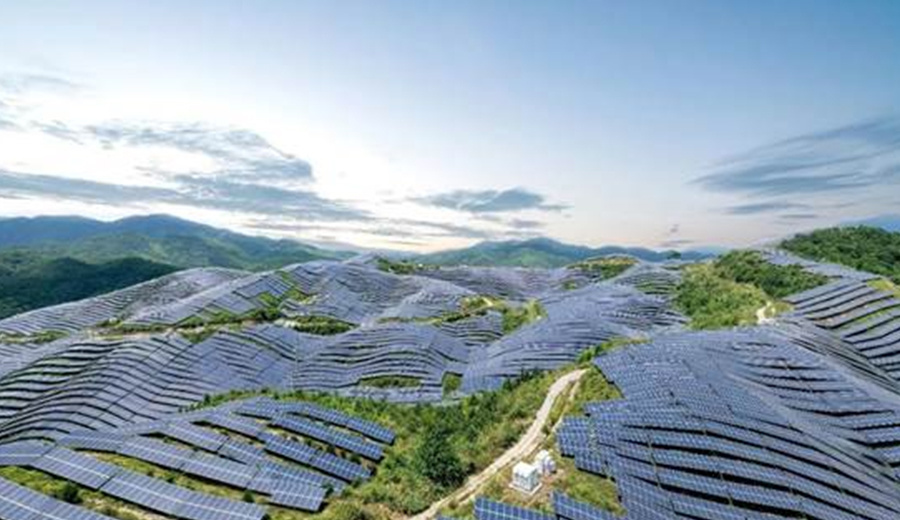
In 2025, the photovoltaic industry is experiencing a "double whammy" of policy volatility and market restructuring. From offshore photovoltaic mounting systems in North China to highland photovoltaic panels in Southwest China, from industrial and commercial rooftops in the east to the Shago wasteland base in the west, the "baton" of policy and the "invisible hand" of the market are jointly charting a new course for energy transformation. For practitioners, only by deeply cultivating technological innovation, accurately grasping the policy rhythm, and actively embracing market changes can they anchor their direction in this transformation and navigate the new blue ocean of "high-quality development" in the photovoltaic industry.




Telephone


Company Address

No. 333, Xijiang Road, Kunshan Economic and Technical Development Zone, Jiangsu Province.